
Camellias at Leonardslee: A Legacy of Passion, Heritage and Beauty
From Sir Edmund to Sir Giles Loder: The Story of Leonardslee’s Camellia Collection
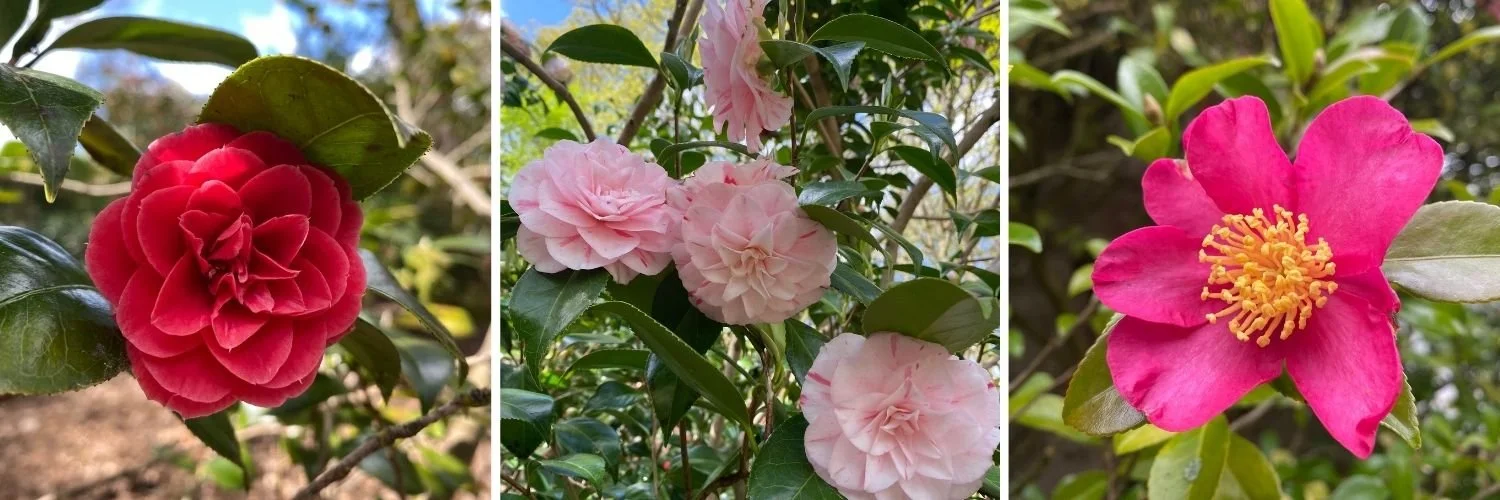
Although Sir Edmund planted many camellias throughout the gardens in the late 1880’s and early parts of the 1900’s in areas such as Camellia Walk, the Loderi Garden and along the Alpine House corridor, it was his Grandson Sir Giles Loder who was the real camellia enthusiast in the Loder family. Not only did he keep camellias that were thought to be less hardy in a number of now defunct or repurposed glasshouses including the Alpine House, below the Clocktower Café, below Leonardslee House, where the shop now resides and a small lean-to space where the Café stumpery beds are now, he also created a whole dedicated Camellia garden down in the valley.
Named Camellia Grove, Sir Giles planted this space on the east side of Waterfall Pond between 1957 and 1958. There are several hundred camellias in this area, mostly C. japonica and C. x williamsii types. The original ethos was to use this space as means of judging the hardiness and performance of (what were at the time) newer varieties when compared against some of our older specimens. Some of the highlights here include the double bicolor red of ‘Adolphe Audusson’, the semi-double pure white ‘General Lamoriciere’, the delicate, intricate small pink flowers of ‘Fir Cone’ and also ‘Cherub’ which is the only Camellia we have growing in the garden that was actually bred by Sir Giles.
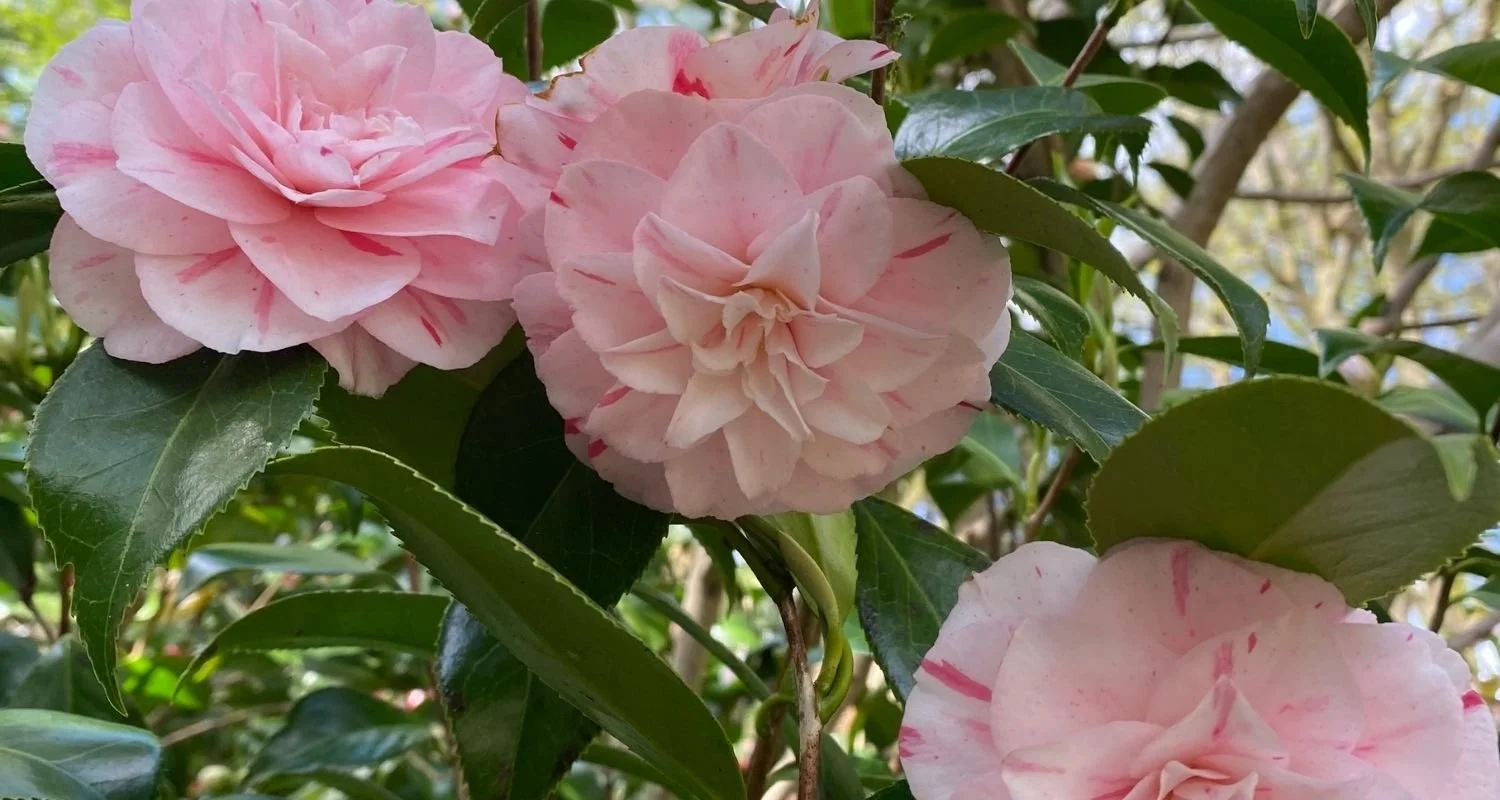
C japonica 'Zoraide Wanzi' in Camellia Grove
Sir Giles was so enthused by camellias that he grew many simply for displaying at RHS flower shows, winning hundreds of awards for his blooms until he stopped exhibiting in the 1970’s. We took this as inspiration when we started to enter the flower shows again in 2023. We have won first prizes for many of our entered camellias since then. We have also won several trophies for some of our camellias including the International Camellia Society Plate for Best In Show for Camellia ‘Tiffany’ and the Peter Betteley Cup for the best South East Camellia performance in 2024 for example. Ironically, the one award that still evades us is the Leonardslee Bowl which was donated to the society by Sir Giles Loder and is awarded to the winner of the best 12 camellia blooms. We’ll try again next time!
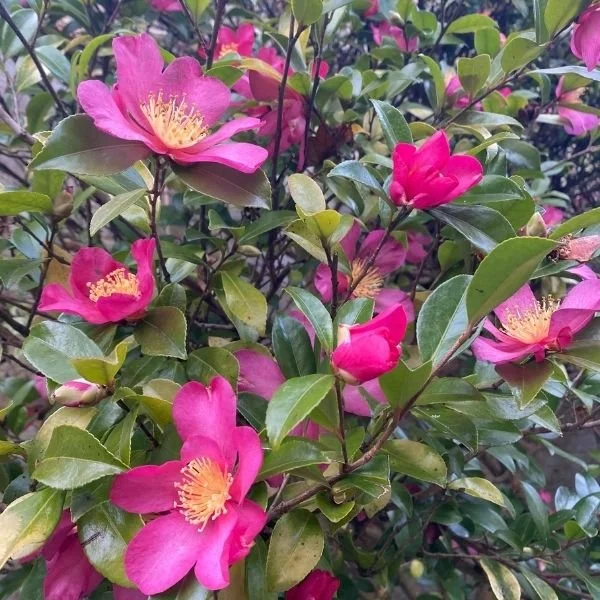
C sasanqua 'Sasanqua Rubra' Dolls House
Another must-see spot for Camellia lovers would be our Autumn and Winter flowering collection that grows against the wall near the Alpine House and Dolls’ House museum. Mostly sasanqua types, they were mainly planted by Sir Edmund Loder and so are well over 100 years old in most cases. A large C. x vernalis ‘Ginru’ shrub is one of my favourites here but the rarest specimens we have in this spot are ‘Sasanqua Rubra’ and ‘Sasanqua Rosea’. Both are believed to be unique to Leonardslee in this country and are also very rare outside of the UK. In fact, we have around 22 unique camellias, which is even more impressive than the 17 unique rhododendrons that we are equally proud of.
In much the same way as we carry out restoration pruning on our large rhododendrons, we also do a very similar hard prune on many of our camellias that have grown too large. This unchecked growth can block views, have a negative impact on other nearby plants or simply bear their flowers too high up for visitors to see and smell them. The best time to carry out this restoration pruning is from mid-February until the end of March. Although it means that in some case we will lose the flowers for that year, it gives the plants the best chance to recover, regrow and flower well again the following year. In some instances we might remove up the ¾ of the growth on the branches. This can be a stressful experience for the plant initially so we make sure we give them a good feed and mulch afterwards with well-rotted compost and then make they don’t dry out during the following Summer.
Although most camellias are Spring-flowering, we have already mentioned how there are a group of Autumn and Winter flowering types too. And now there are new Summer-flowering varieties coming on to the market. We were encouraged by the RHS Rhododendron, Camellia and Magnolia Group to trial one of these varieties a few years ago. We purchased a few plants of ‘1001 Summer Nights Jasmine’ and although they appear to be very slow-growing, they do offer a later floral display than the main collection.
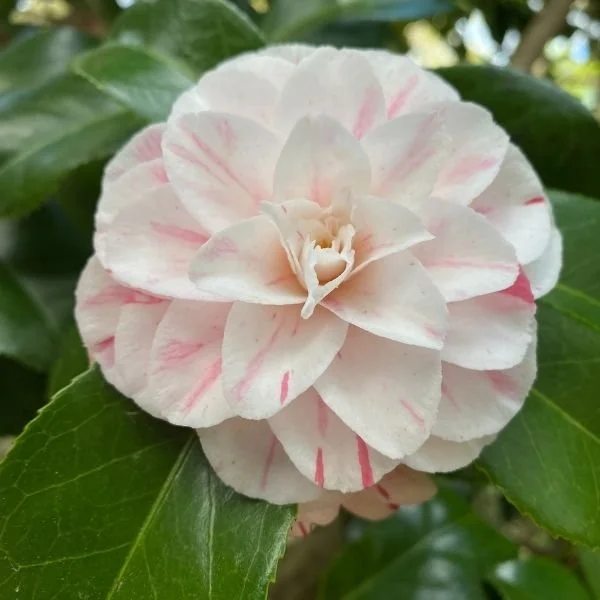
C japonica 'Zoraide Wanzi' Camellia Grove
Camellias can be used in a number of garden settings. Most grow as shrubs of varying size but some can reach tree-like status. For example, we have a specimen of Camellia x williamsii ‘Golden Spangles’ that has been suggested to us might even achieve Champion Tree status when we next have a visit from the Tree Register of Britain & Ireland who verify and award such designations. Other camellias here grow as hedges or as climbing wall shrubs, such as the specimens growing near Alpine House for example. All of this goes to show that camellias can be very versatile as well as beautiful and fascinating.
Although we have nearly 300 camellias recorded on our plant database, there are plenty more that are currently unidentified and unlabelled. We are striving to rectify this and are working with local specialists and with the International Camellia Society (who we recently joined as a member) to get as many of these plants verified as possible in the near future. This will not be an easy process though as there are over 220 different species and more than 51,000 different registered cultivars!
Most camellias are native to Asia where they are not only used ornamentally but also the leaves of particularly Camellia sinensis are used to make the tea that you drink every day. In their native lands, the oil from the seeds and fruits of certain camellias are used in cooking oils, hair products, lubrication and also in Japanese medicine. When they first appeared in Western Europe, camellias were initially given the name of the ‘Japanese Rose’ due to the similarity of their flowers and the first recorded Camellia in the UK was in 1739 at Thorndon Hall in Essex.
The next time you’re here, make sure take time to explore our Camellia collection and see how many different and unusual types you can find.