
Garden News | December 2025
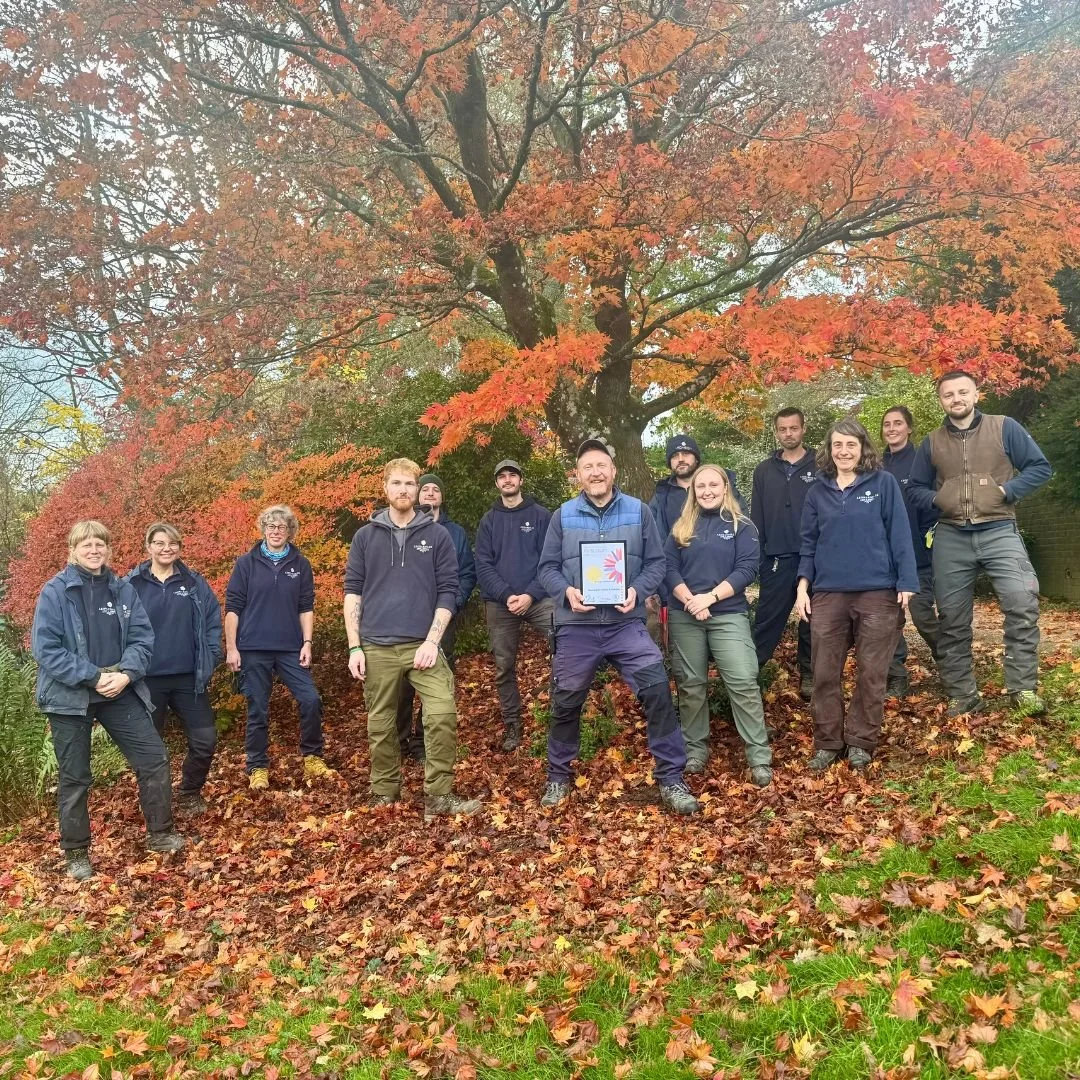
Leonardslee Gardening Team
Well, here we are in the final month of 2025 and what a year it’s been. My, how time flies!
December not only marks the start of true winter, it’s also of course, when the festive season really kicks into gear. It’s also a time to reflect on the previous 11 months, as well as look to what might lie ahead in 2026. My brilliant team of gardeners here have had a very busy year in the garden and have achieved so much, what with our ongoing restoration work, the addition of thousands of new plants, trees, shrubs and bulbs, the various awards and accolades we’ve received (more of which below) and everything else that goes with looking after and restoring an historic Grade I listed 240 acre woodland garden and estate! The end of a year is a great time to pause for a moment and reflect, but also realise that there is still much to enjoy in the garden right now and also plenty to keep us busy this December.
The temperatures have yet to drop to the expected levels at the time of writing. It’s been quite a wet autumn again this year after a hot, dry summer, but we’re hoping that we get a proper frosty winter with much less rain, although the climate change predictions probably suggest otherwise. The unseasonally warm and damp conditions have meant that we’ve not been able to cut back and ‘put to bed’ some of our borders ready for mulching yet. We’re also still mowing lawns almost as regularly as we were in October and although the conditions have allowed the welcome extension of late flowering plants such as the various Salvia cultivars, Dahlias and the likes of Amicia zygomeris ( a statuesque perennial with beautiful butter yellow pea-like flowers and purple brachts found in the Herbaceous Beds) for example, the garden will need some proper cold weather at some point to put everything into dormancy and to knock back any pests and diseases that might otherwise linger. The plus side of the delayed wintery conditions has meant that we’ve been able to extend our planting season right through to the end of November, so every cloud has a silver lining! Look out for new planting schemes at Red House Corner, the beds and borders below the Clocktower Kitchen and the Herbaceous Beds when they burst into bloom next spring.
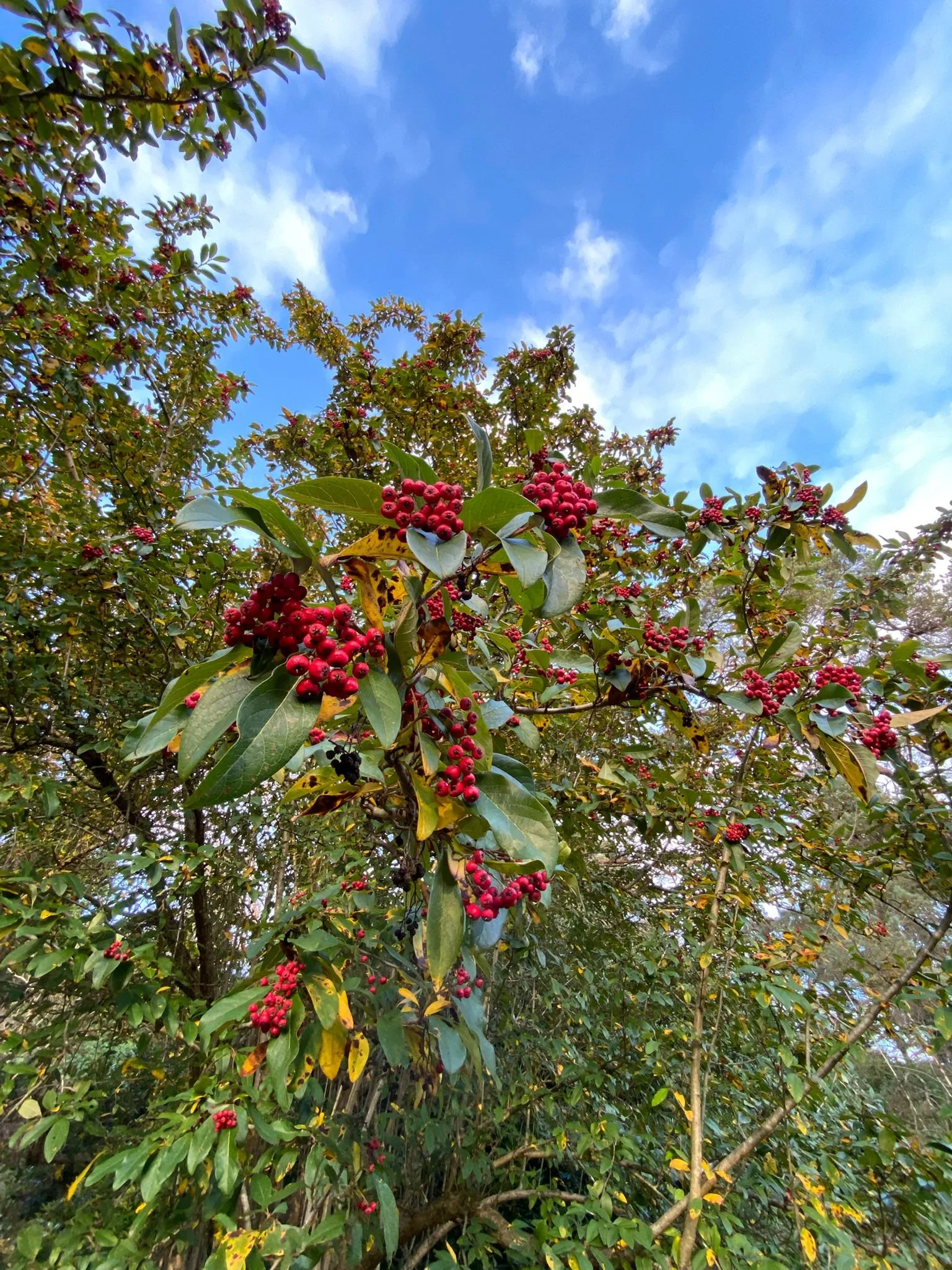
All being well, Jack Frost should be nipping at our noses, fingers and toes this month, and the frosty winter wonderland that this creates is truly a sight to behold here at Leonardslee. Ice-crusted seed heads on the herbaceous plants we’ve left standing in our more formal areas, for example, and frozen berries, such as the aptly named Christmas Berry shrubs (Photinia davidiana) down at the lakes, as well as the Skimmia japonica shrubs on the way to Bluebell Bank, are a true joy of December.
While we’re talking of berries, don’t forget the famously festive holly trees across the whole estate, including some interesting variegated specimens behind the Rock Garden and a stunning Christmas-tree shaped shrub at the bottom of Falling Walk. As well as holly, why not see if you can spot any ivy and mistletoe around the garden when you’re next here too to complete the festive set!
The aforementioned Christmas Berry, we also have other plants with yuletide connections on display right now, such as the Christmas Rose (or Hellebore), which you’ll spot dotted through the areas near the house, and Christmas Box (also known as Sarcococca). This is one of my favourite plants at this time of year. Covered in sweetly scented flowers, you’ll find a number of varieties in and around the Rock Garden, in the house borders and also further afield as you explore the Loderi Garden for instance. It also makes a great cut stem to bring into the house if you have any at home. I’ve often wondered whether it would make a good hedging plant, what with it being evergreen and with the added bonus of the scented blooms. Maybe we’ll try it one day?
While you’re exploring the garden, make sure you get down to the lakes in the bottom of the valley this December as they reflect the skeletal deciduous trees and evergreen conifers that surround them. Did you know, that if you wanted to keep warm this month and walked round the perimeter of all of the lakes here at Leonardslee, it would take over 3700 steps and would burn nearly 250 calories?! That’s the equivalent of a large slice of Christmas cake or a couple of small mince pies! I think I might have to do a couple of laps myself!
Talking of keeping moving when it’s cold at this time of year, if you haven’t ventured up to the Pinetum in the Deer Park before, now is a perfect opportunity. A Pinetum is a collection of any type of conifer, be it pine, fir or cedar for example. Conifers look great throughout the whole year, particularly when covered in cones, but in December they really stand out and offer an added interest that other trees that have lost their leaves do not. The original Pinetum at Leonardslee was planted by Sir Edmund Loder in the early 1900’s up near the Top Garden to the north of the estate, but most of this area was unfortunately lost in the great storm that battered this part of the country on October 15th, 1987. Sir Edmund’s Great Grandson Robin Loder then re-planted the current Pinetum exactly 100 years later at the opposite end of the Leonardslee valley. Some of my favourite trees here include Cryptomeria japonica ‘Sekkan Sugi’ with its bronze winter foliage, Thujopsis dolobrata ‘Variegata’ with it multi-coloured flattened needles and the Black Spruce (Pinus mariana) which has stunning small purple cones. There are plenty of conifers that you could call ‘Christmas Trees’ in the Pinetum too, which all adds to the festive spirit here in the garden.

I have some fantastic news to reveal this month.
Back in November, I attended an awards ceremony for the South & South East branch of Britain in Bloom, and I’m delighted to say that we were awarded a Gold Medal!
The judges said that it was particularly unusual to achieve this standard at the first time of entering so we are very proud and pleased. I escorted the judging panel around the garden back in July of this year (admittedly probably not our feature season in the garden) and they assessed everything from planting schemes, historical context, biodiversity, seating, paths, signs, litter, volunteering opportunities and more besides. The garden staff and volunteers have worked very hard this year and should be congratulated for this achievement.
How we protect our plants for the winter:
Us gardeners will also no doubt be wrapping up warm this winter while we’re working in outdoors, but we’ll also make sure some of our more tender plants are well protected at this time of the year too. This is something that you should do at home as well if you have any half-hardy or tender specimens in your own garden. At Leonardslee, this might involve a good mulch with well-rotted organic matter over the top of underground Dahlia tubers in the Herbaceous Beds or around Canna crowns in the House borders for instance. The mulch will insulate the roots in the soil and stop them becoming waterlogged after heavy rainfall or snow-melt. Another method of winter protection is to wrap a plant in horticultural fleece. We’ll do this on the likes of our tree ferns (Dicksonia antarctica) in The Dell to stop them from suffering too much frost damage. Once wrapped, the crown can then be packed with straw or even dead bracken fronds as a real ‘belt and braces’ measure to prevent the ill effects of wet, icy weather.
There are some plants that we have to bring indoors entirely. Our Abyssinian Banana plants (Ensete ventricosum ‘Maurelii’) from around the house, for instance, will need this sort of protection. A couple of years ago, we tried dry-storing them by removing all soil from the roots, cutting off all the fleshy foliage and then keeping them in a cardboard box in a dark corner, after first storing them upside down to drain as much water from the stems as possible. Unfortunately, that wasn’t very successful, possibly down to the extremely extended below freezing temperatures we had in winter 2022. The last couple of years, we cut back most of the leaves but potted them up in barely moist compost before storing them in a dry corner of our polytunnels instead. This allowed us to see when the growing point emerges again in Spring, ready for re-planting and was much more successful so we’ll be using this method again this year too. Fingers crossed!
Other jobs for my team this month that might like to do at home will include continued planting of trees, shrubs and bulbs as long as the soil is workable; continued clearance and restoration of key areas such as the Hillside Garden; getting some of our home-made mulch down on the beds and borders of the formal areas as well as getting the seed and plant catalogues out and planning for next year’s displays.
I know that in garden centres and nurseries, the main season for selling plants is the summer, but that really is the worst time to add plants to your garden. It’s much better to plan ahead and get them in the ground in autumn or very early winter, as this will mean that a) the plant is dormant and less greedy for water and nutrients, and b) you won’t need to be irrigating them every 5 minutes. Mulching afterwards with your own compost will not only insulate the roots but also conserve moisture, improve soil structure and encourage work activity.
Our garden volunteers are still running a couple of general garden tours this month at 10.30 am on Monday 1st and Wednesday 17th so make sure you book onto one of those if you’re interested to learn more about the history of the garden.
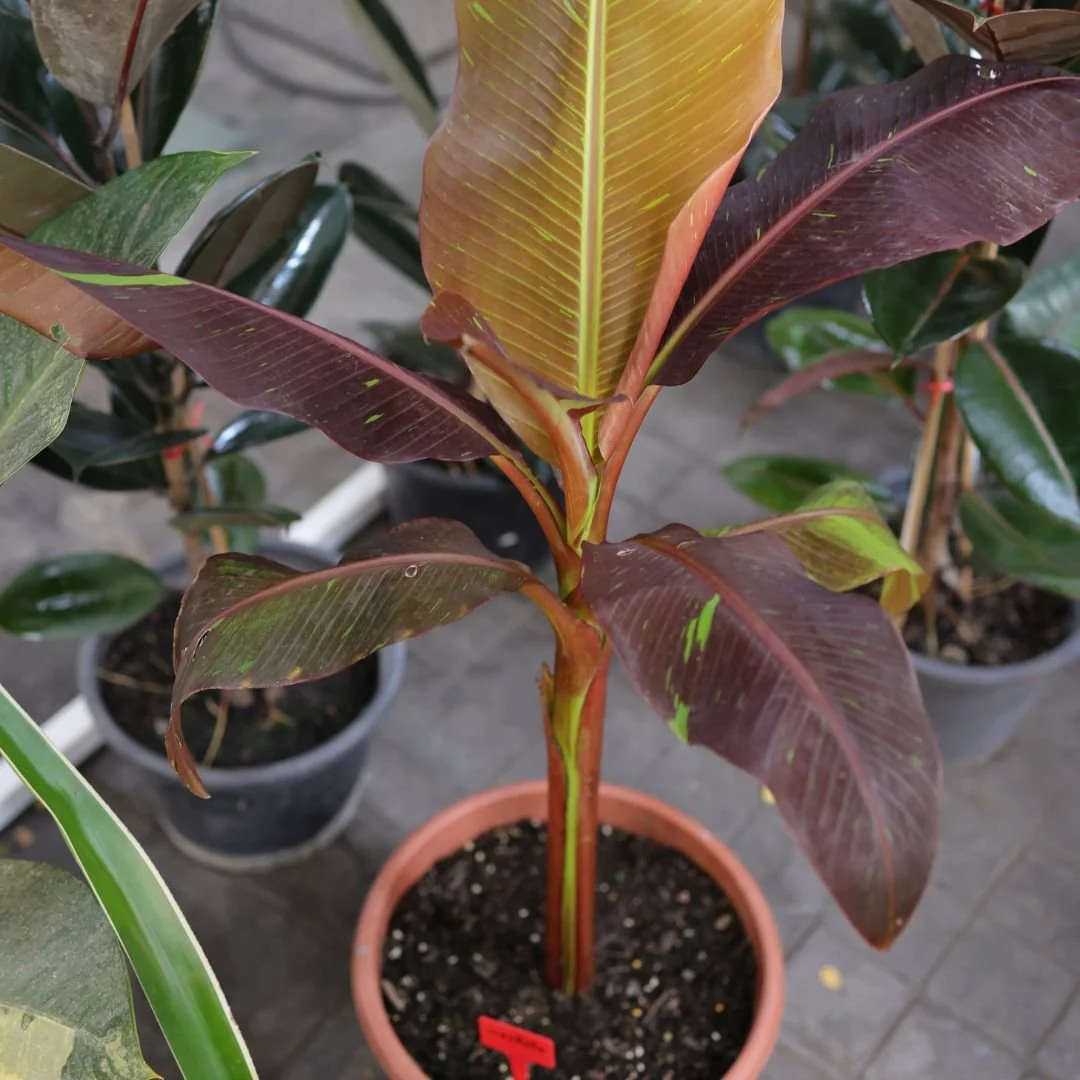
Abyssinian Banana plants (Ensete ventricosum ‘Maurelii’)
As you can see, there is plenty for you to see and plenty for us to be doing in the garden during December. I hope you all enjoy the Leonardslee Lights event this year and have a fantastic Christmas. Stay healthy and we look forward to seeing you here again in 2026 for another exciting year in the garden!
Jamie Harris
Head Gardener