
As a woodland garden, our feature seasons are often considered to be Spring and Autumn, but I would argue that Summer gives them a good run for their money these days.
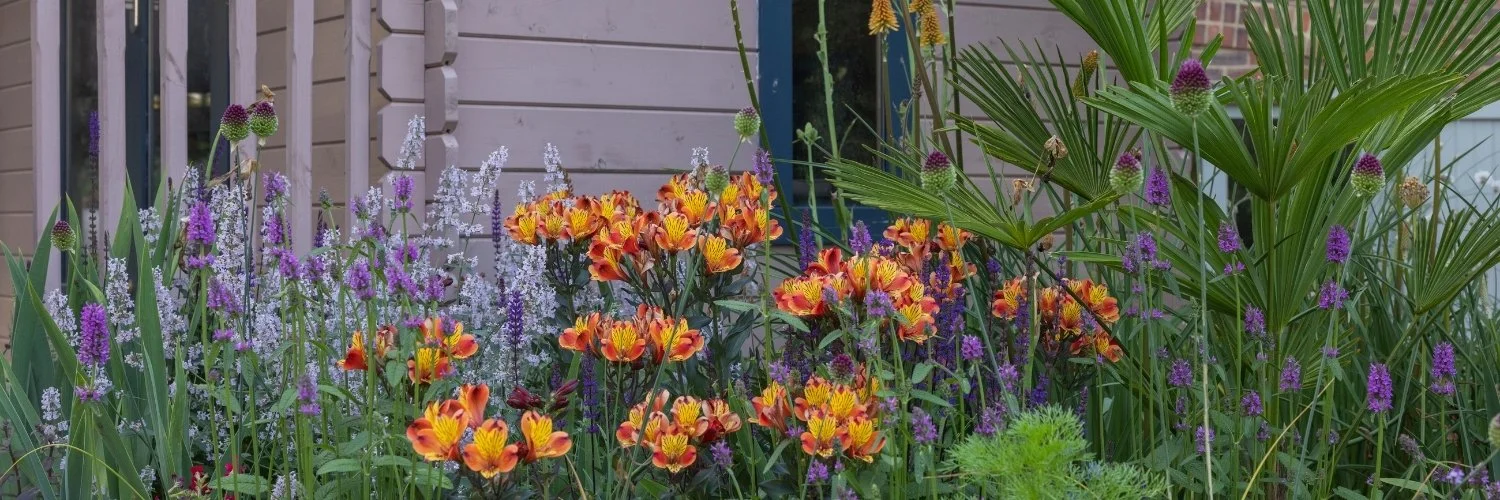
The Loder family originally only opened for short periods in spring and autumn but we’ve done a lot of work over the last five years to extend the season of interest into the summer months. For many people, there cannot be a better time to sit in or wander around a garden such as Leonardslee and enjoy everything it has to offer than the height of summer. You’ll find so much to see and do here during August: from the sights and smells of the new floral displays around the formal areas near the house and Clocktower Kitchen, to the stunning views across and out of the estate that we continue to re-open, or the glimpses and sounds of busy insects buzzing and flitting around the lakes, August is a fantastic time to take it all in.
Gardening Through the Heat

July followed the recent trend this year of being incredibly hot and dry at times so we’re bracing ourselves for further periods of drought as the immediate effects of climate change continue to become apparent. We’ve certainly stopped planting anything new in the garden at this time of the year for instance and have to keep a regular eye on any plants that have gone in the ground over the last 12 months or so to make sure their young roots can cope with the dry soil environment that they’re finding themselves in. Another effect of the lack of rain is the condition of our lawns. They will stop, or certainly slow, their growth without rainfall and may be looking a parched shade of yellow or light brown in some cases rather that the lush green seen in spring or autumn. Unlike a severely drought-stressed plant, luckily grass is very resilient and will soon bounce back once a little moisture is available once again.
Top Tips for Watering Wisely
Watering will no doubt be a key task in your garden at home too. As lovely as a British summer can be, the hot weather isn’t without its challenges! Some plants start to wilt when the amount of water they lose through their leaves (known as transpiration) is greater than the amount they can draw in from the soil through their roots. Established trees and shrubs and long-standing perennials should have an extensive root system to tap deeper water but any newly planted specimens will need keeping an eye on. Pots and containers will also need regular watering as the volume of compost in them can only hold a limited amount of water and nutrients. You can reduce the amount of mains water you use at home by harvesting rainfall in water butts, adding moisture-retentive granules to pots and containers, mulching around the base of plants after a heavy rainfall to trap the moisture, and watering in the evening or very early morning or when the pot or border is in shade to stop the moist soil being dried out by the sun. You can even save the water from your washing up bowl to use on your plants, particularly if you use an ecological brand of washing up liquid. If you want to be even more ‘green’ you can use waste pasta water on plants too as it adds various nutrients such as zinc, calcium, phosphorus, iron and potassium to the root zone. If you grow plants from seed, it pays not to overwater them when they’re young as this can make them more water-hungry and water-dependent as they grow. It’s usually best to be mean with watering when young as this will make them much more resistant when they get their roots in the ground or into a larger pot. Here’s another tip - when planting out small plants in the ground, soak the roots thoroughly before hand and also fill the planting hole with water. This will allow the plants a better chance to settle and their roots will chase the water as it drains into the deeper soil. Whatever method you use, good luck!
Rediscovering The Hillside Garden
It’s not only our delicate plants that will need to take on extra water as the temperatures remain high. Us people sometimes need some respite from the heat when enjoying the garden too, and we’re lucky that Leonardslee is blessed with plenty of shady spots to escape the summer sun during August. You could wander through Camellia Walk near Leonardslee House with its collection of 100+ year old specimens that were planted by Sir Edmund Loder, or Camellia Grove down near the lakes that was planted in the 1950’s by his grandson Sir Giles Loder for instance. There are also plenty of shaded paths running from the upper gardens northwards to the Dell too but if you’re feeling a bit more energetic you might want to check out the Top Garden on the north east side of Clapper Pond, just up from the beehives. Although previously referred to as The Ancient Woodland, the whole garden at Leonardslee is actually designated as “planted ancient woodland” so this area to the north east of the lakes is no more ancient than the rest of the garden and we are now referring to it as The Top Garden, as the Loder family once did. A secluded, shady woodland area in the bottom of its own valley, The Top Garden was also the original site of the Pinetum, planted by Sir Edmund between 1901 and 1905, but which was lost in the 1987 storm. The current Pinetum in the Deer Park was planted exactly 100 years after the original by Robin Loder, the last member of the family to own the estate. We opened up the first phase of the Top Garden in 2021 and then added a small section just inside this area to the north where we uncovered some interesting forgotten Rhododendrons and a few remaining conifers from the original Pinetum. Our team of tree surgeons and gardeners are now continuing their work on the next phase down in the valley to the east of the Coronation Garden. This area is historically referred to as Hillside Garden and the first section was opened just after easter this year. Once completed this will join up with the eastside lake walk. I’ll keep you posted as to when this is ready to explore and enjoy.
Behind the Scenes with the Garden Team
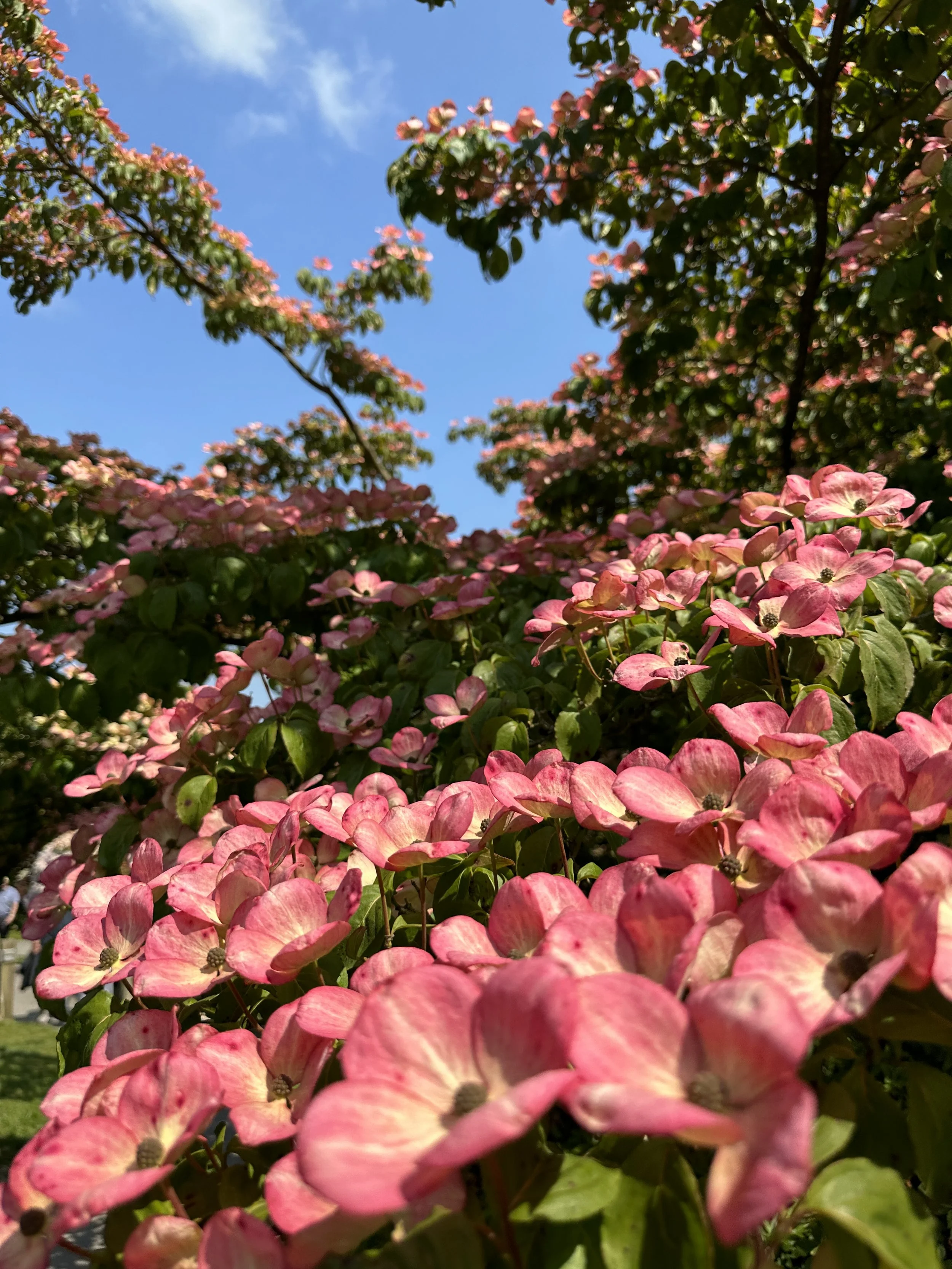
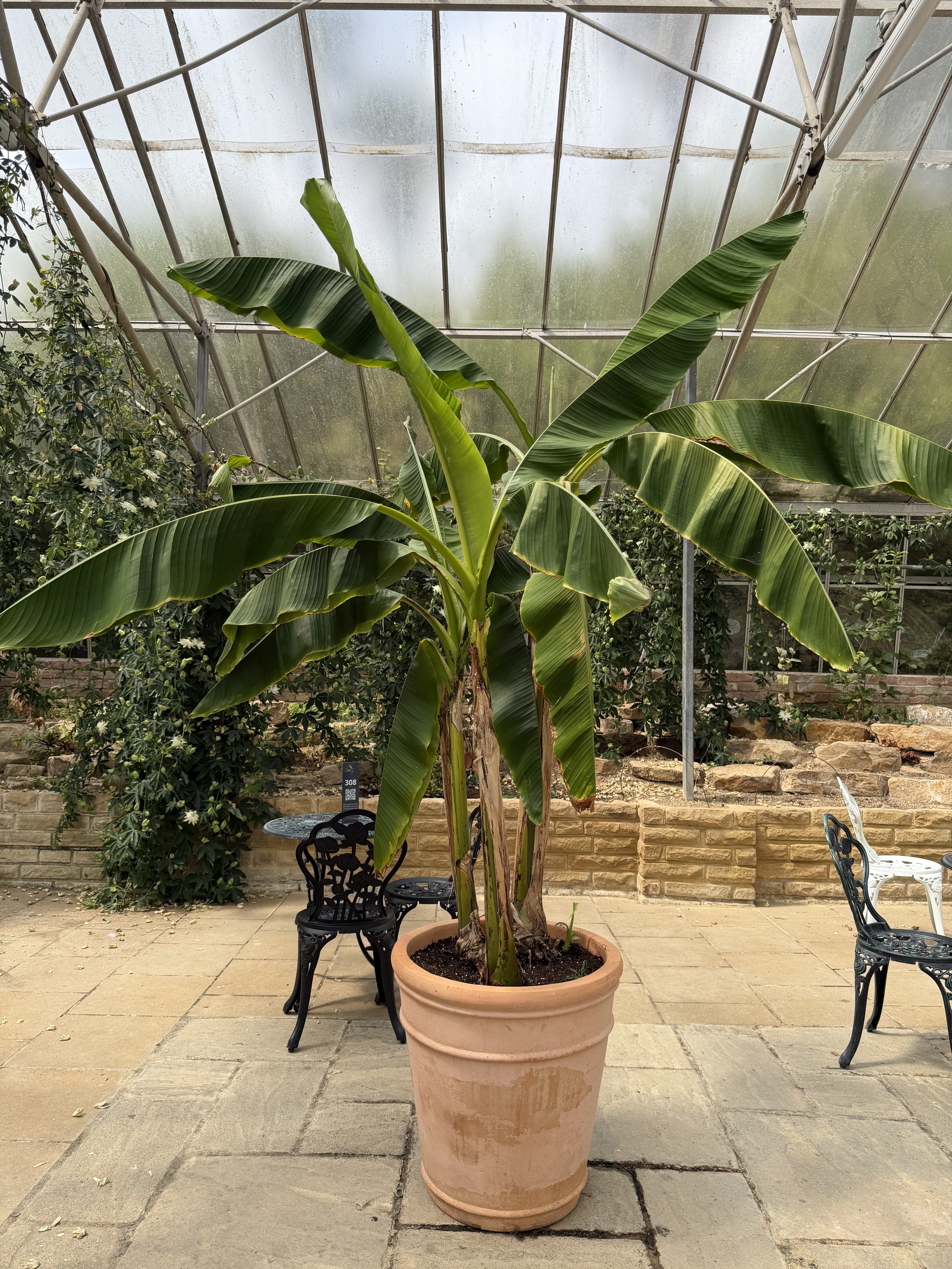
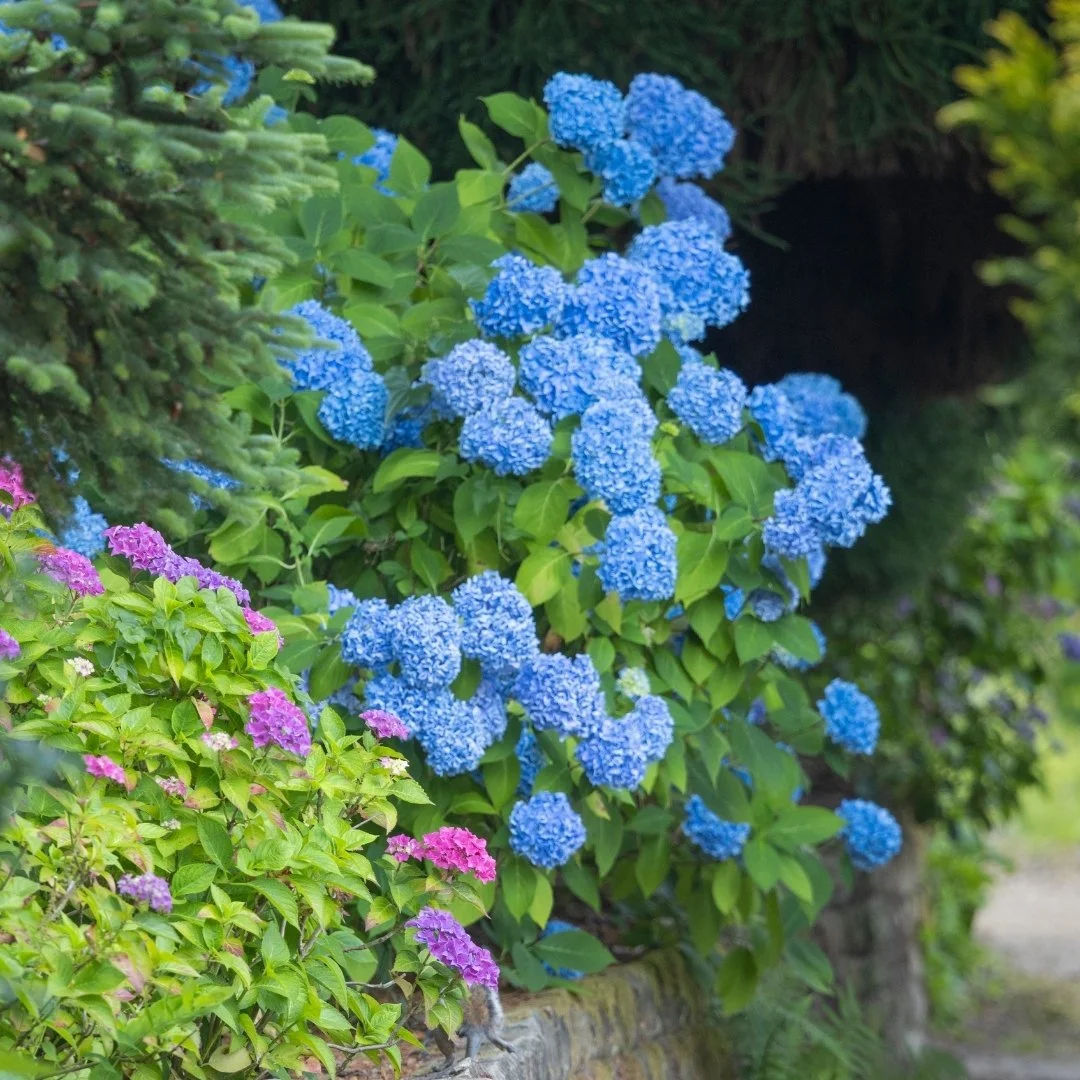
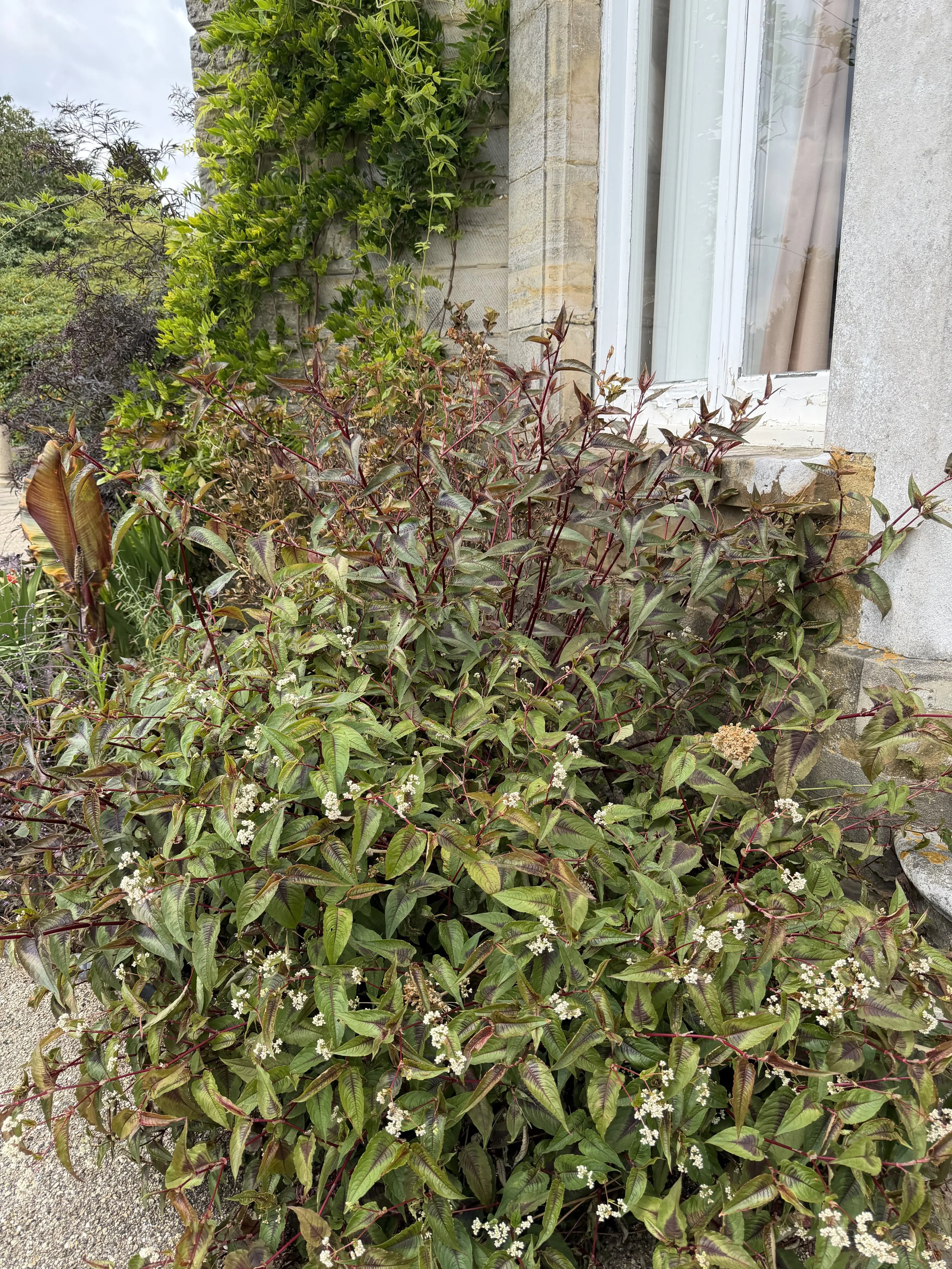
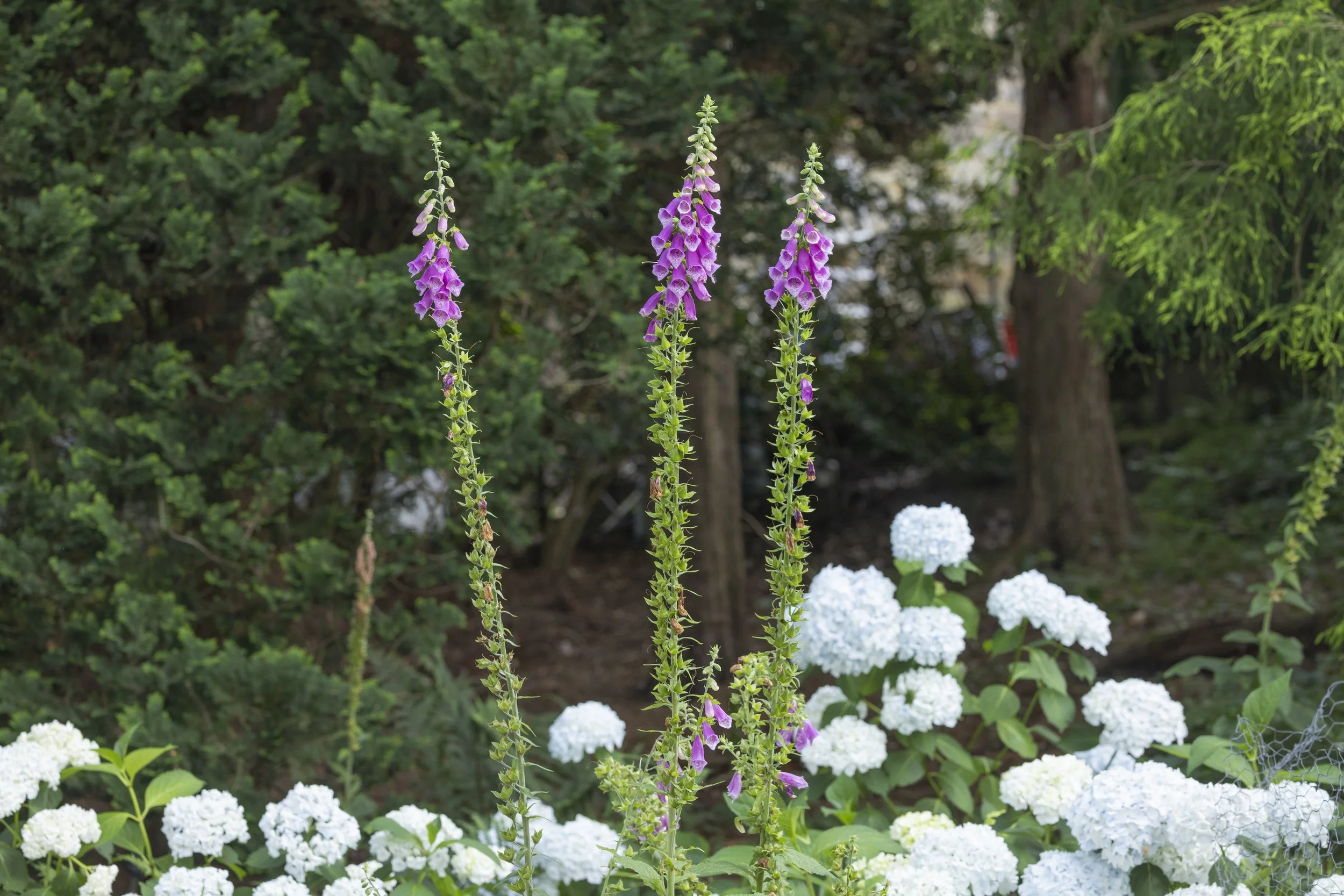
It’s been a fantastic year for flowering trees and shrubs generally. You might have caught the likes of Hoheria sexstylosa (a beautiful evergreen tree with white flowers from New Zealand, seen in Camellia Walk for example), Catalpa bignonioides (the Indian Bead Tree, found on Daffodil Lawn) or Tilia tomentosa ‘Petiolaris’ (the weeping silver-leaved lime tree that has been covered in bees just below the Clocktower Kitchen during a recent visit perhaps? Our Hydrangeas have also been doing themselves proud. As I’ve mentioned before, we now prune them all slightly differently, straying from the advised method and instead only pruning them back to the top fat buds rather than down to the lowest double set as is usual. This was done back in April and was swiftly followed by a good organic feed and mulch. Either way, it seems to have worked! We hope that at least some of these plants persist into August, although the lack of rainfall means that the early flowering varieties may have moved onto their dried flower seed head appearance perhaps. We may also see the Cornus kousa fruits starting to turn pink and red as everything seems to be early again this year. See how many of these raspberry-like fruits you spot as you wander through the garden.
As you visit the top areas of the garden at the moment, you’ll spot plenty of interesting new flowers and foliage to admire. Our displays around the house are into their fourth year now and we’re really pleased with how they’ve developed and filled out. Look out for the purple and orange exotic scheme around the south and east sides of the mansion where the likes of Ensete ventricosum ‘Maurelii’ (Abyssinian Banana) and Physocarpus opulifolius ‘Amber Jubilee’ (Ninebark Shrub) will be drawing attention along with purple-leaved Canna and annual Castor Oil Plants (Ricinus communis) for example. The west side of the house has a different planting scheme due to the shadier aspect here. Full of amazing foliage textures and shades, one plant I’m really looking forward to seeing flowering here again is Kirengeshoma palmata, or Yellow Wax Bell, that was only planted a couple of years ago. Not often seen in many gardens, make sure you keep an eye out for the profusion of their unusual primrose blooms.
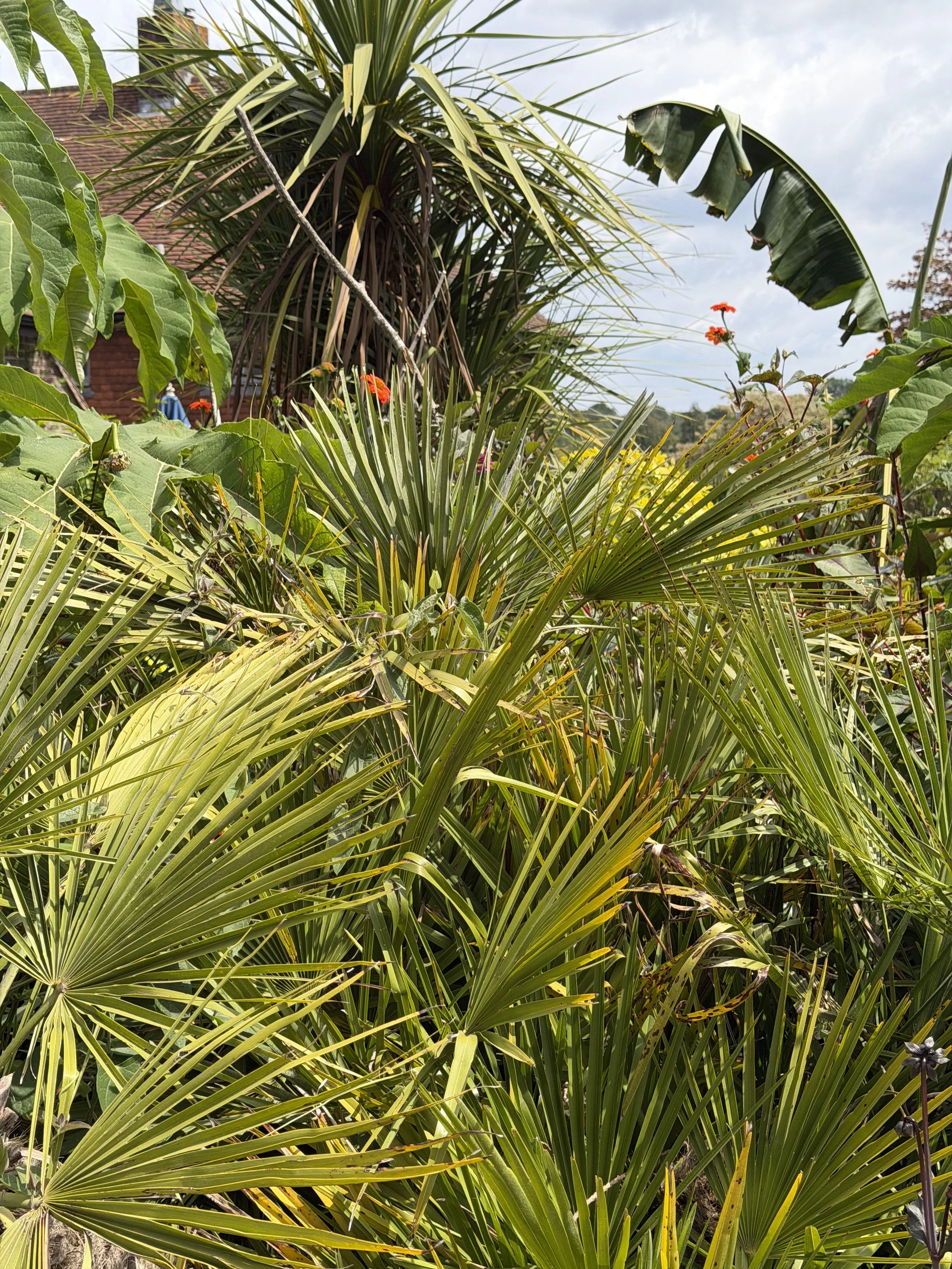
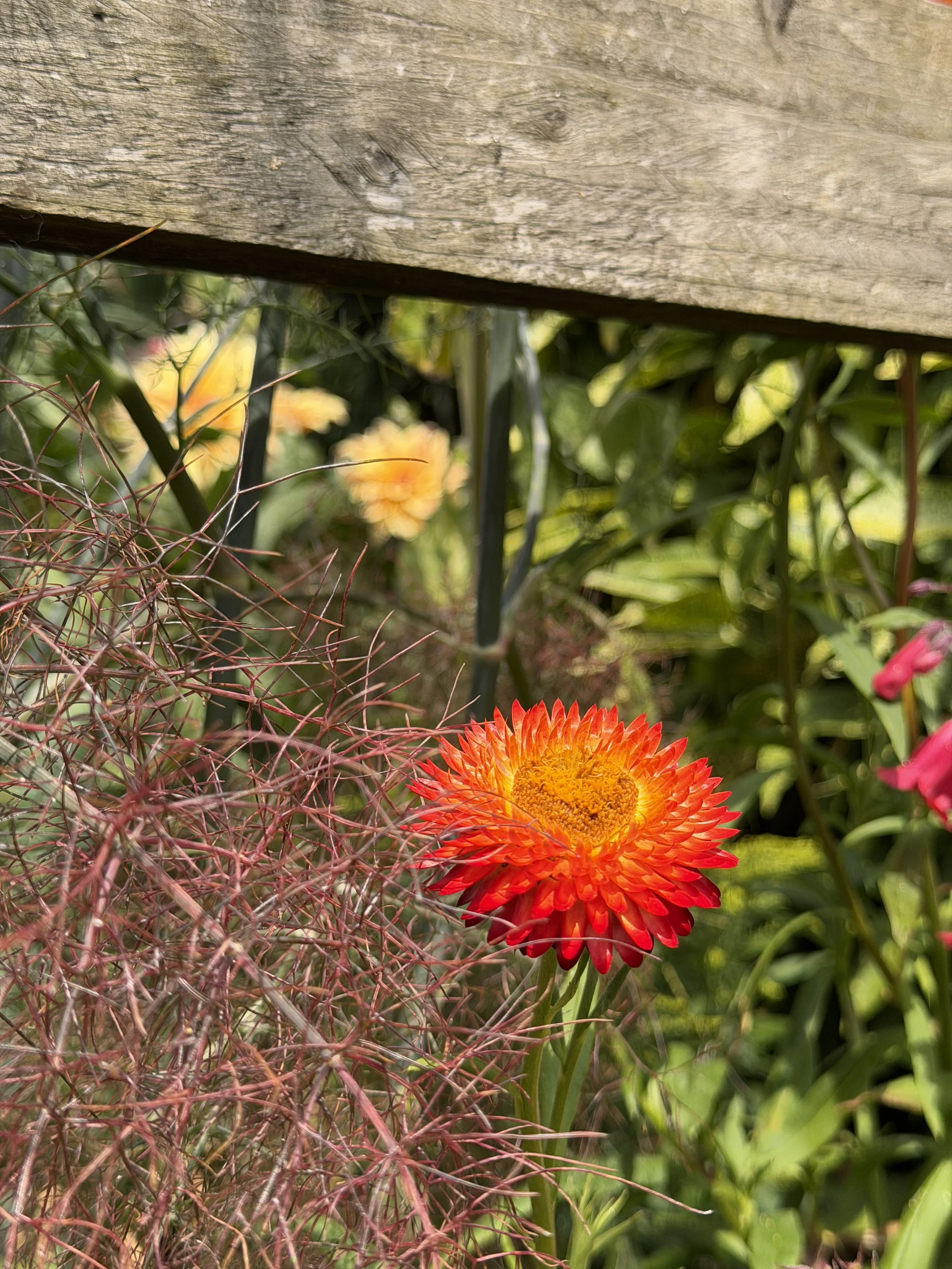
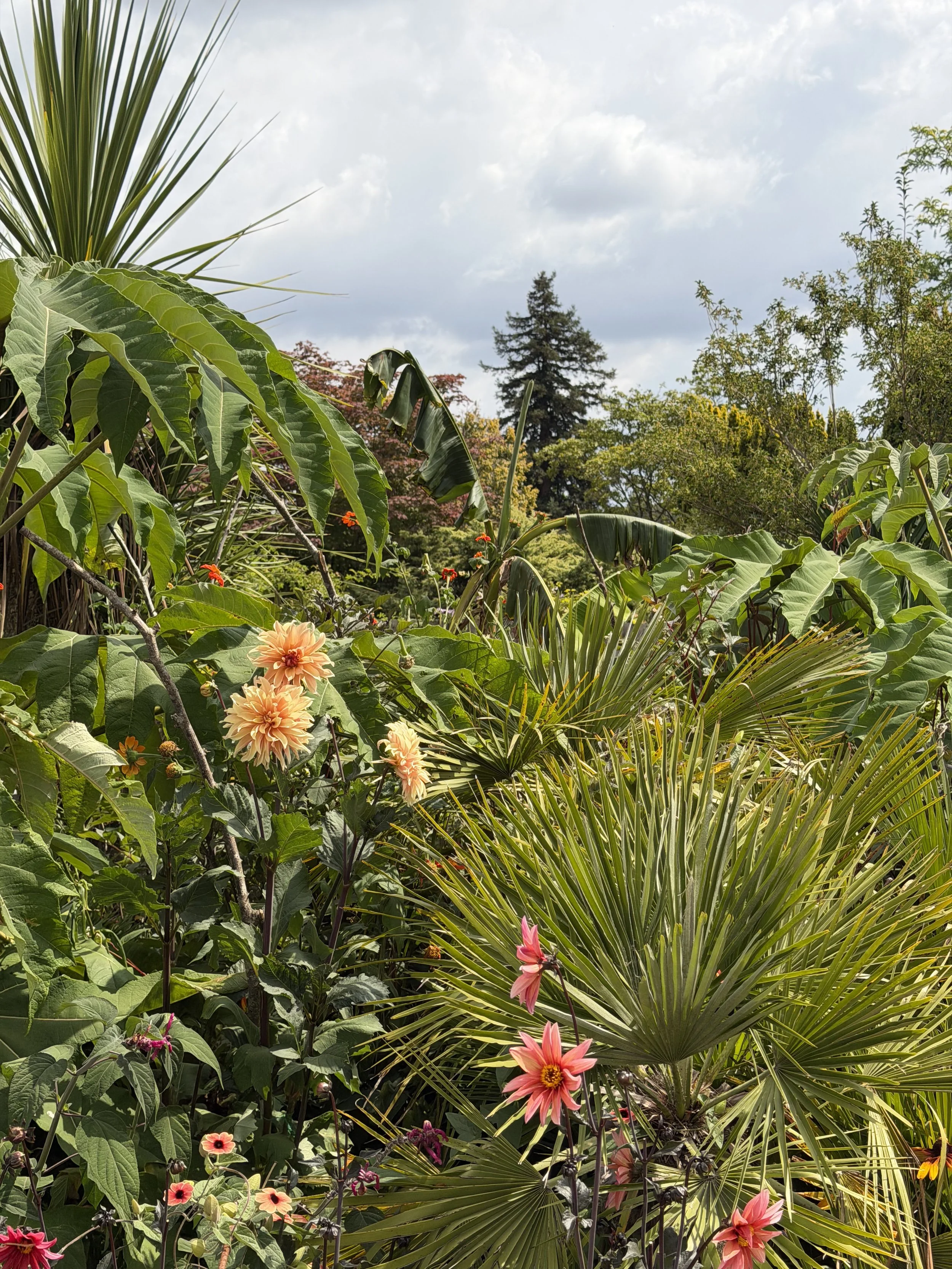
One of our newest planting schemes can be found next to the Play Area outside the Studio event space. We call it our Exotic Bed and it is filled with vibrant colours of yellow, red and orange. This border was created to house some of the larger plants we moved out of our old glass visitor entrance when it was turned into the new shop. There is an old, large Chamaerops humilis (Mediterranean Fan Palm) in the middle of the border which gave us the inspiration to go for a more exotic look. We wanted to create a border with impact, particularly during the summer season once the rhododendrons and azaleas have stopped flowering. Structure is provided by dramatic foliage – from the Chamaerops and Yucca to the Fatsia japonica and Tetrapanax ‘Rex’, as well as towering Musa (banana palms). We’ve introduced Dahlias ‘Waltzing Mathilda’ and ‘Black Jack’ to give a long season of flowering. Finally, we propagated a range of annuals from seed, including Helichrysum (straw flowers) and Tithonia ‘Torch’ (Mexican sunflower). Stone edging, with sandstone from the estate, finishes it off neatly. We’re delighted with how well it has filled out again this year.
Aside from the usual Summer cycle of watering, mowing, edging, strimming and weeding, another key job for the garden team this month will be to get on top of some of our unwanted plants around the garden such as brambles, bracken and Rhododendron ponticum. Unchecked, bracken can take over an area so we’ll be strimming and pulling it where we can. The best way to tackle bracken however is to crush the stems so we’ve recently invested in a ‘Bracken Basher’ – essentially a tined metal drum on wheels that is towed behind one of our ATVs. Rhododendron ponticum is an invasive plant that was originally introduced into the UK as an ornamental back in the 1700’s but is now recognised as a thug as well as a vector for one of the nastiest garden diseases, Phytophthora ramorum. You are not allowed to sell it or plant it and landowners are encouraged to reduce its spread. We will be removing it where we can, but this will take many years in a phased process.
Plan Your August Tour
So, as always, lots to see and do in the garden here at Leonardslee. There is something new to stumble upon somewhere every day so get out there and explore! Don’t forget there will be visitor garden tours on Monday August 3rd, 10th and 24th and also on Wednesday 19th if you haven’t been on one of them yet. Either way, I look forward to seeing you here again this month.
Jamie Harris, Head Gardener
