
A December to Remember at Leonardslee!

I can’t believe another December is here and another year is almost over. My, how time flies! December not only marks the start of true winter, it’s also of course when the festive season really kicks into gear.
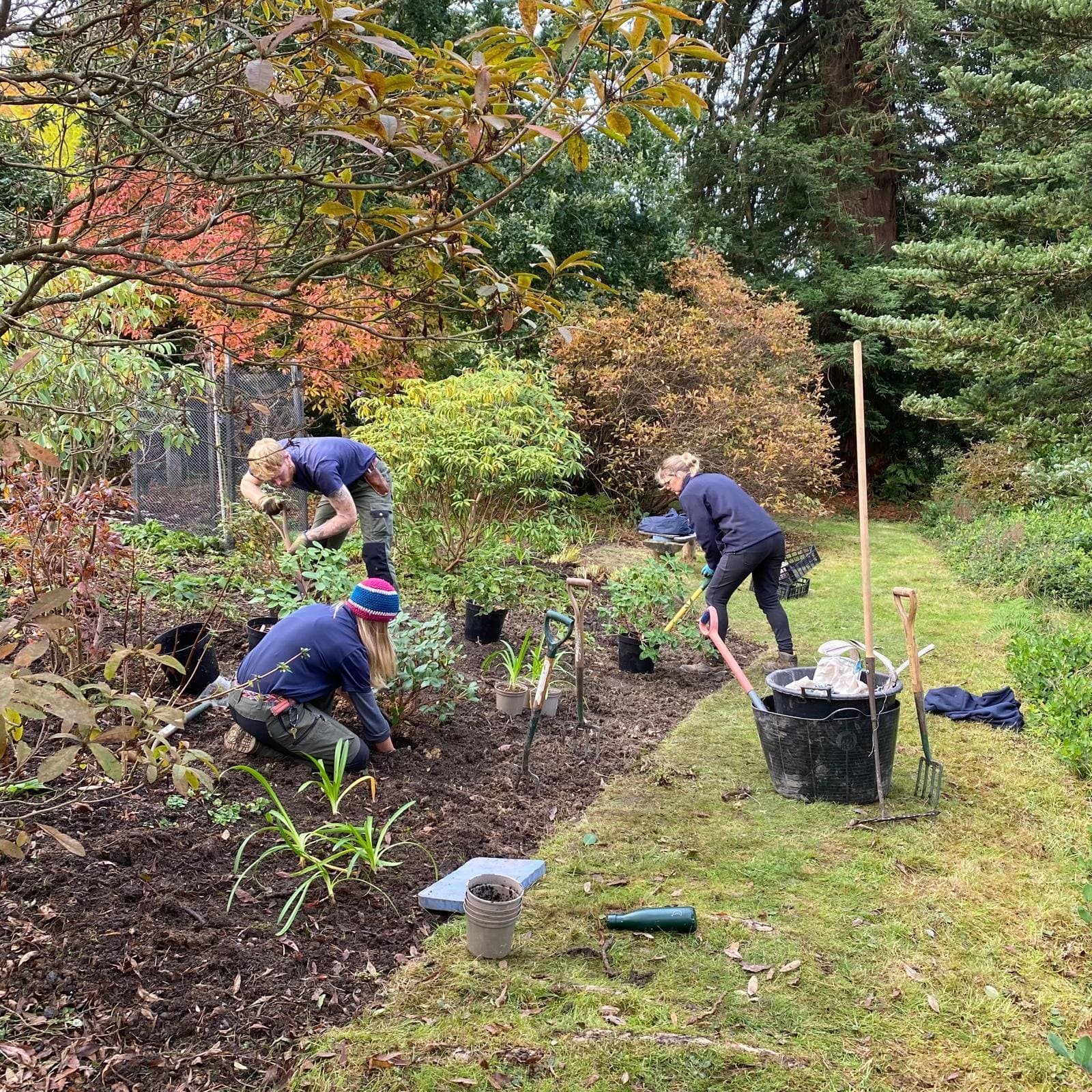
It’s also a time to reflect on the previous 11 months as well as looking to what might lie ahead in 2027. My brilliant team of gardeners here have had a very busy year in the garden and have achieved so much, what with our ongoing restoration work, the addition of thousands of new plants, trees, shrubs and bulbs, the various awards and accolades we’ve received including our Britain In Bloom awards, our prizes at the RHS flower shows and my own personal AJ Waley medal for services to Rhododendron cultivation, as well as everything else that goes with looking after and restoring an historic Grade I listed 240 acre garden and estate! The end of a year is also a great time to not only pause for a moment and reflect, but also realise that there is still much to enjoy in the garden right now and also plenty to keep us busy this December.
The Garden Through December
A Changing Season
The temperatures have yet to drop to the expected winter levels for any sustained period at the time of writing. After a very challenging hot dry summer, this autumn also hasn’t been as wet as we were hoping. When we’ve been planting shrubs recently, the soil below the top inch or two has still been as dry as dust in fact. We’re now hoping that we get a proper frosty winter, although the climate change predictions probably suggest otherwise with the tail end of the El Niño due to trigger another wet winter. The unseasonally warm conditions this autumn have meant that we’ve not been able to cut back and ‘put to bed’ some of our borders ready for mulching yet. We’re also still mowing lawns almost as regularly as we were in September and although the conditions have allowed the welcome extension of late flowering plants such as the various Salvia cultivars, Dahlias and the likes of Amicia zygomeris ( a statuesque perennial with beautiful butter yellow pea-like flowers and purple brachts found in the Herbaceous Beds) for example, the garden will need some proper cold weather at some point to put everything into dormancy and to knock back any pests and diseases that might otherwise linger. The plus side of the delayed wintery conditions has meant that we’ve been able to extend our planting season right through to the end of November, so every cloud has a silver lining! Look out for a number of new trees and shrubs across the garden in areas such as the Orchard, Interlude Lawn, Daffodil Lawn, the Rock Garden and down on the banks around the lakes for example.
A Frosty Winter Wonderland
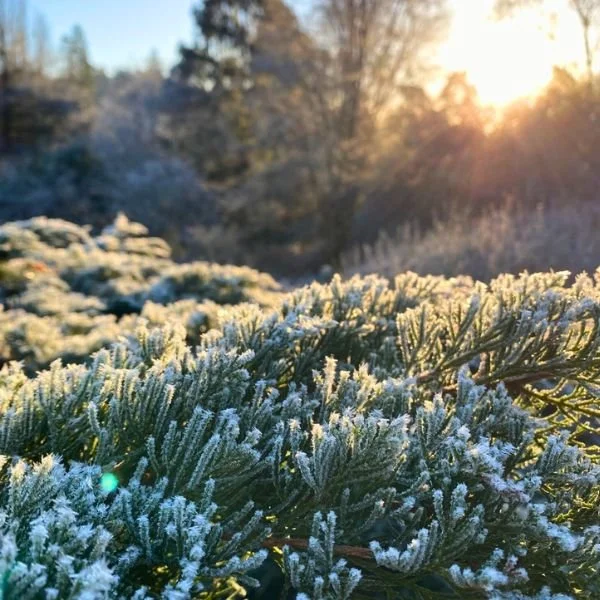
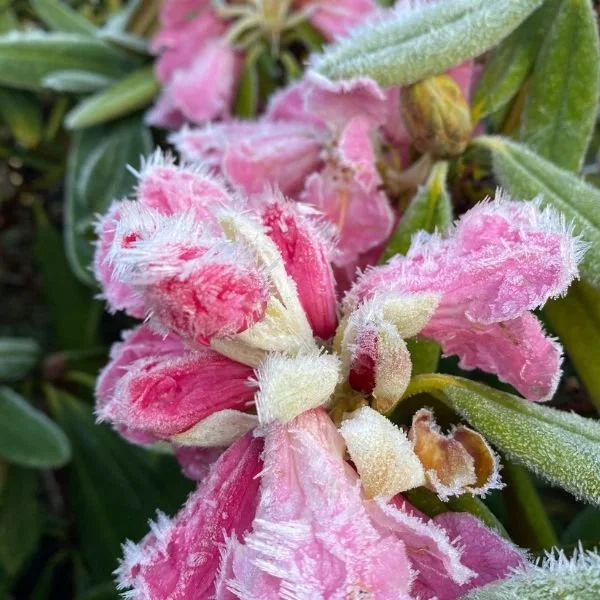
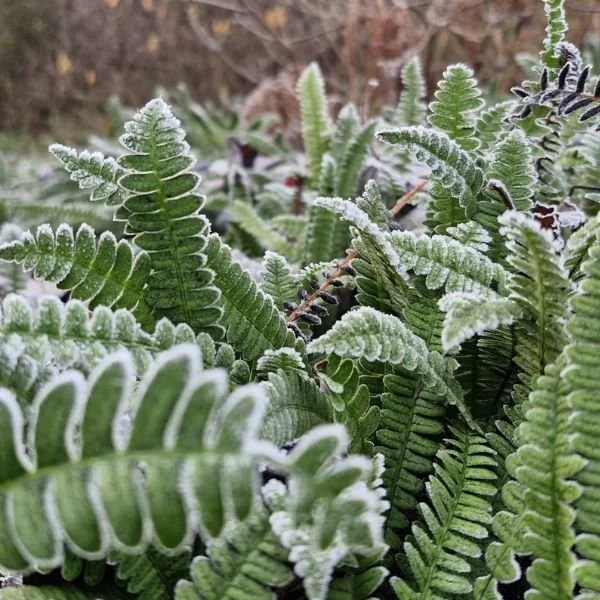
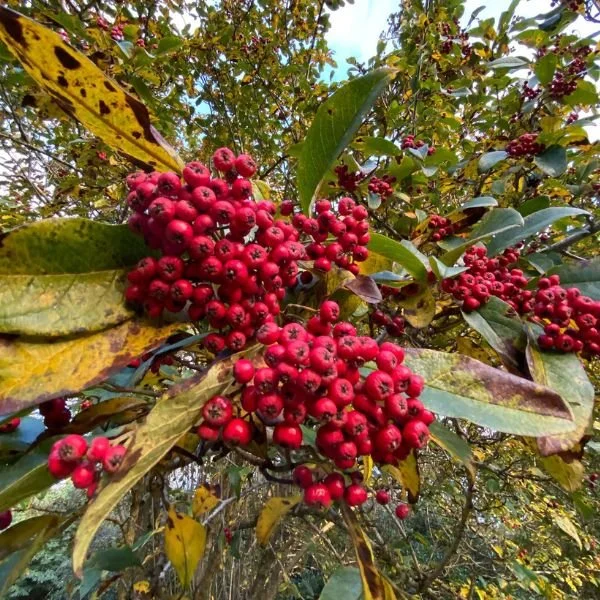
So, all being well, Jack Frost should be nipping at our noses, fingers and toes this month eventually and the frosty winter wonderland that this creates is truly a sight to behold here at Leonardslee. Ice-crusted seed heads on the herbaceous plants we’ve left standing in our more formal areas for example and frozen berries, such as the aptly named Christmas Berry shrubs (Photinia davidiana) down at the lakes as well as the Skimmia japonica shrubs on the way to Bluebell Bank, are a true joy of December. And while we’re talking of berries, don’t forget the famously festive holly trees across the whole estate including some interesting variegated specimens behind the Rock Garden and a stunning Christmas-tree shaped shrub at the bottom of Falling Walk. As well as holly, why not see if you can spot any ivy and mistletoe around the garden when you’re next here too to complete the festive set!
Festive Flowers and Fragrance
As well as the aforementioned Christmas Berry, we also have other plants with yuletide connections on display right now, such the Christmas Rose (or Hellebore) which you’ll spot dotted through Camellia Walk for example, and Christmas Box (also known as Sarcococca). This is one of my favourite plants at this time of year. Covered in sweetly scented flowers, you’ll find a number of varieties in and around the Rock Garden, in the house borders and also further afield as you explore the Loderi Garden for instance. It also makes a great cut stem to bring into the house if you have any at home. I’ve often wondered whether it would make a good hedging plant, what with it being evergreen and with the added bonus of the scented blooms. Maybe we’ll try it one day?
Discover the Lakes and Pinetum
3,700 Steps Around the Lakes
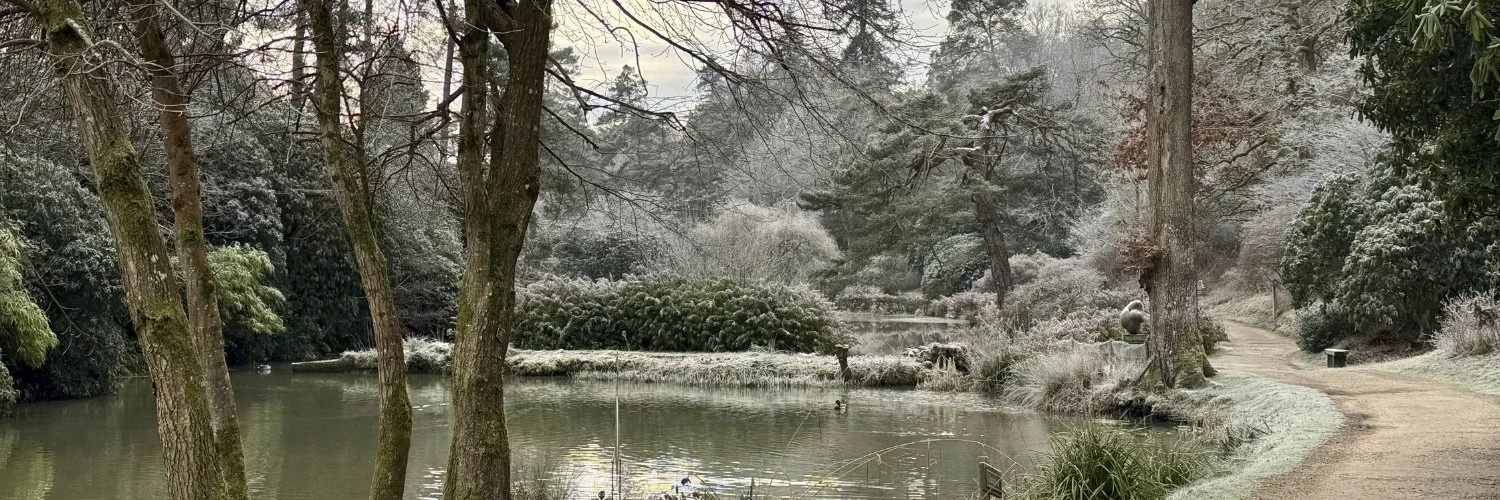
While you’re exploring the garden, make sure you get down to the lakes in the bottom of the valley this December as they reflect the skeletal deciduous trees and evergreen conifers that surround them. Did you know, that if you wanted to keep warm this month and walked round the perimeter of all of the lakes in the valley here at Leonardslee, it would take over 3700 steps and would burn nearly 250 calories?! That’s the equivalent of a large slice of Christmas cake or a couple of small mince pies! I think I might have to do a couple of laps myself!
A Winter Walk Through the Pinetum
Talking of keeping moving when it’s cold at this time of year, if you haven’t ventured up to the Pinetum in the Deer Park before, now is a perfect opportunity. A Pinetum is a collection of any type of conifer, be it pine, fir or cedar for example. Conifers look great throughout the whole year, particularly when covered in cones, but in December they really stand out and offer an added interest that other trees that have lost their leaves do not. The original Pinetum at Leonardslee was planted by Sir Edmund Loder in the early 1900’s up near the Top Garden to the north of the estate, but most of this area was unfortunately lost in the great storm that battered this part of the country on October 15th, 1987. Sir Edmund’s Great Grandson, Robin Loder, then re-planted the current Pinetum exactly 100 years later at the opposite end of the Leonardslee valley. Some of my favourite trees here include Cryptomeria japonica ‘Sekkan Sugi’ with its bronze winter foliage, Thujopsis dolobrata ‘Variegata’ with it multi-coloured flattened needles and the Black Spruce (Pinus mariana) which has stunning small purple cones. There are plenty of conifers that you could call ‘Christmas Trees’ in the Pinetum too, which all adds to the festive spirit here in the garden.
Preparing the Garden for Winter
Protecting Tender Plants
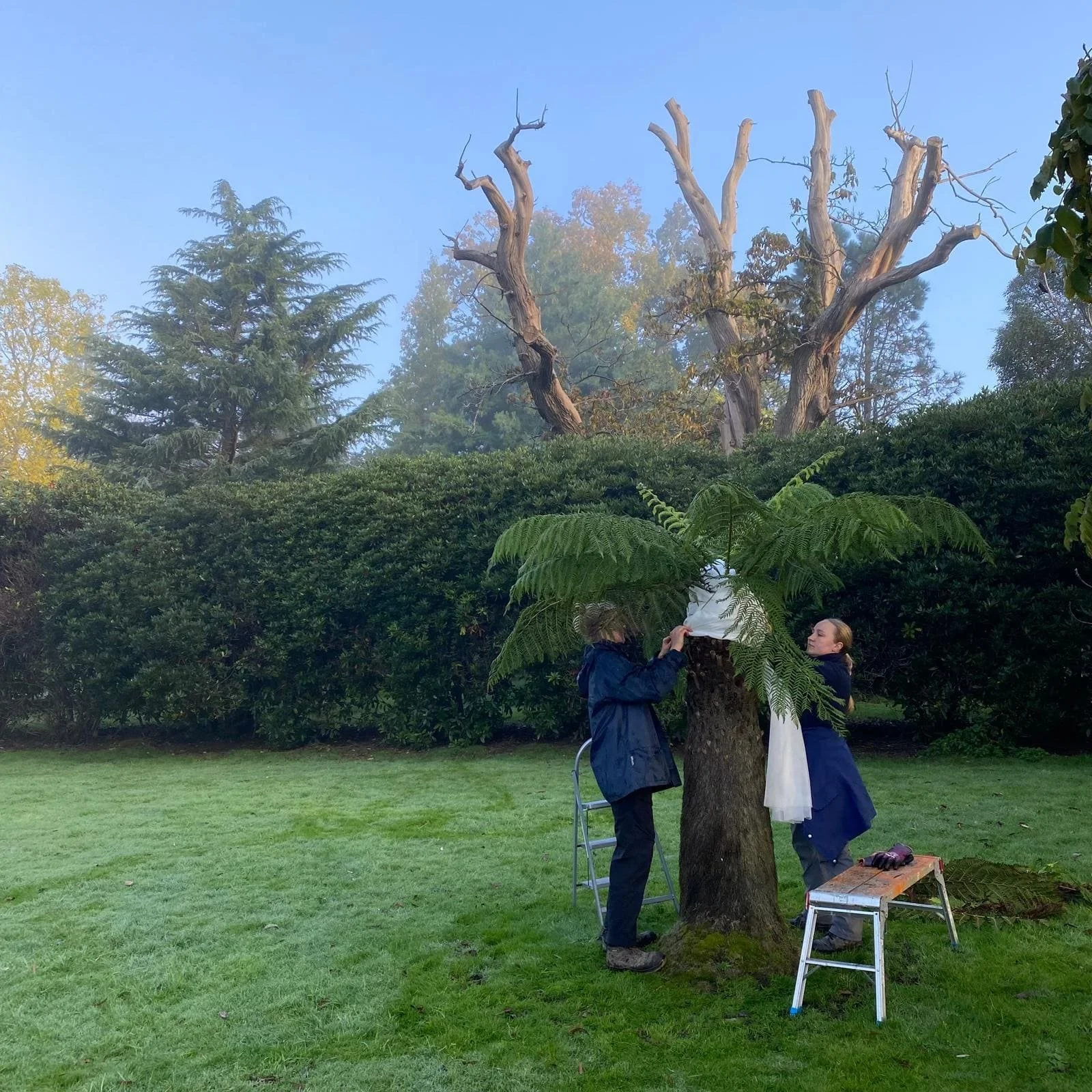
Us gardeners will also no doubt be wrapping up warm this Winter while we’re working in outdoors, but we’ll also make sure some of our more tender plants are well protected at this time of the year too. This is something that you should do at home as well if you have any half-hardy or tender specimens in your own garden. At Leonardslee, this might involve a good mulch with well-rotted organic matter over the top of underground Dahlia tubers in the Herbaceous Beds or around the Canna crowns in the House borders for instance. The mulch will insulate the roots in the soil and stop them becoming waterlogged after heavy rainfall or snow-melt. Another method of Winter protection is to wrap a plant in horticultural fleece. We’ll do this on the likes of our tree ferns (Dicksonia antarctica) in The Dell to stop them from suffering too much frost damage. Once wrapped, the crown can then be packed with straw or even dead bracken fronds as a real ‘belt and braces’ measure to prevent the ill effects of wet, icy weather.
Bringing Plants Indoors
There are some plants that we have to bring indoors entirely. Our Abyssinian Banana plants (Ensete ventricosum ‘Maurelii’) from around the house for instance, will need this sort of protection. A few years ago we tried dry-storing them by removing all soil from the roots, cutting off all the fleshy foliage and then keeping them in a cardboard box in a dark corner, after first storing them upside down to drain as much water from the stems as possible. Unfortunately, that wasn’t very successful, possibly down to the extreme extended below-freezing temperatures we had in the Winter of 2022. Since then we have preferred to cut back most of the leaves but potted them up in barely moist compost before storing them in a dry corner of our polytunnels instead. Before bringing them inside we now make sure that they have been exposed to the first frost of the year beforehand as this will trigger proper dormancy. This whole process allows us to see when the growing point emerges again in Spring.
December Gardening Jobs
Other jobs for my team this month that might like to do at home will include continued planting of trees, shrubs and bulbs as long as the soil is workable; continued clearance and restoration of key areas such as the Hillside Garden; getting some of our home-made mulch down on the beds and borders of the formal areas as well as getting the seed and plant catalogues out and planning for next year’s displays. I know that in garden centres and nurseries the main season for selling plants is the summer but that really is the worst time to add plants to your garden. It’s much better to plan ahead and get them in the ground in autumn or very early winter as this will mean that a) the plant is dormant and less greedy for water and nutrients, and b) you won’t need to be irrigating them every 5 minutes. And mulching afterwards with your own compost will not only insulate the roots but also conserve moisture, improve soil structure and encourage worm activity.
Until Next Year...
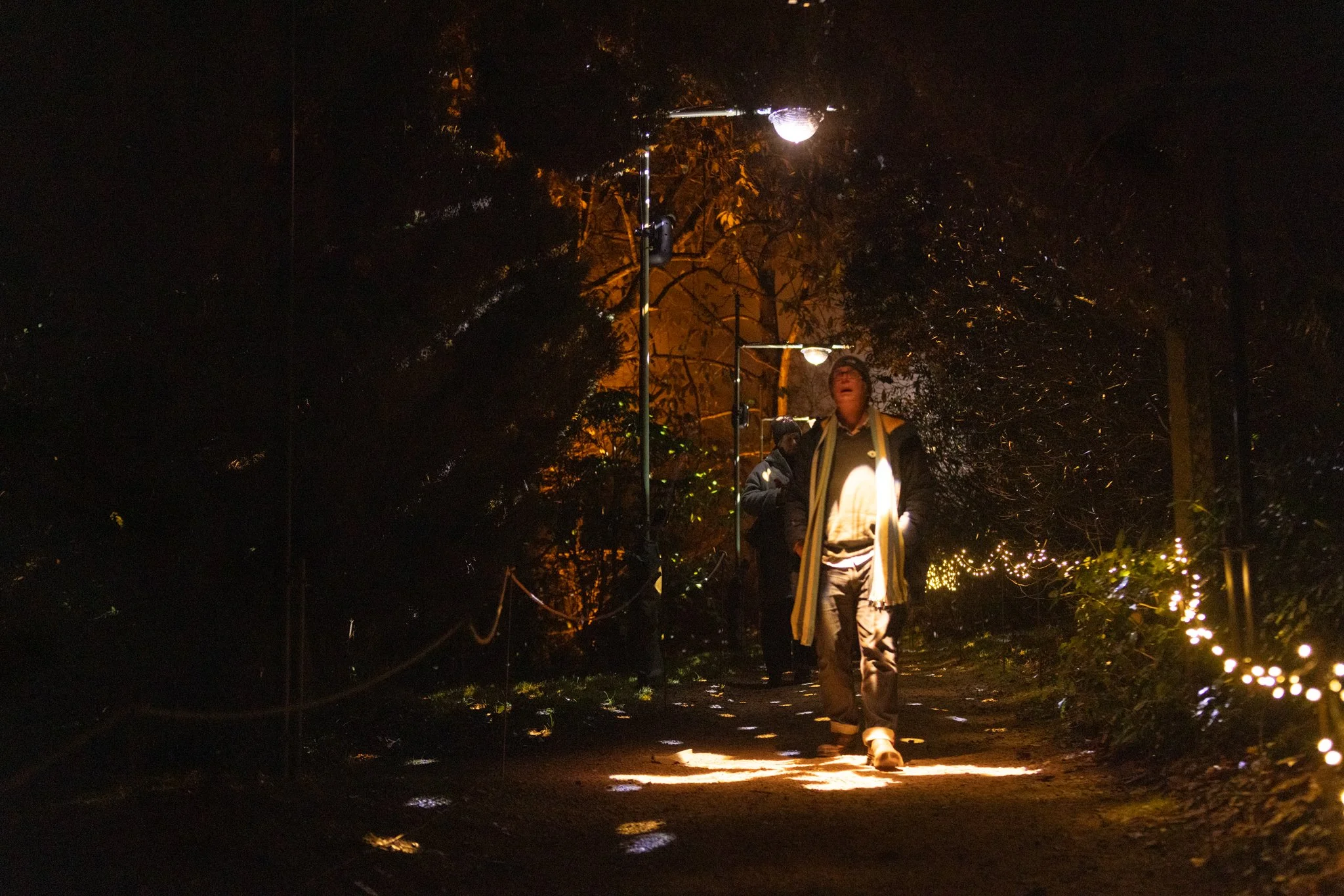
As you can see, there is plenty for you to see and plenty for us to be doing in the garden during December. I hope you all enjoy the Leonardslee Lights event this year and have a fantastic Christmas. Stay healthy and we look forward to seeing you here again in 2027 for another exciting year in the garden…!



Jamie Harris
Head Gardener
